
明星大侦探
US transshipment claims attempt to build ‘higher fence,’ disrupt global supply chains: experts_我的网站

一 |
快科技8月24日消息,近日,全新一代海鸥实车图流出,新车不仅车身尺寸大幅增长,还在车顶配备了激光雷达,硬件配置迎来明显升级。从实车图来看,该车前脸线条棱角分明,狭长的多边形大灯组造型锐利,保险杠两侧带有棱角化的内凹造型,一改现款圆润的设计语言。 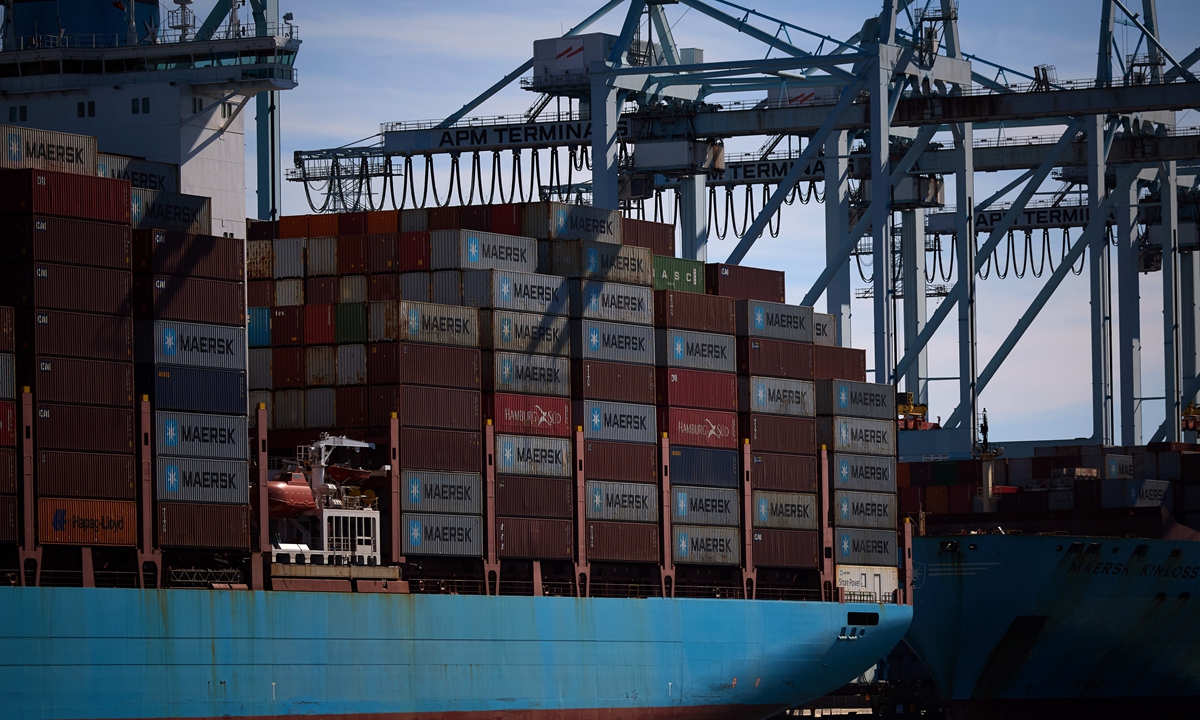
When even major US allies and trading partners are swept into Washington's alleged China-linked transshipment network, is the US still cracking down on its so-called illegal tariff evasion, or is it raising its "small yard, high fence" higher and tighten it further by wielding its tariff stick and extending tariff controls across normal global supply chains?
The White House on Thursday released a report identifying roughly 40 economies as participants in what it calls a "Shadow Transshipment Network", alleging that Chinese goods are being routed through third countries to evade higher US tariffs. The list stretches across Asia, Europe and the Americas and includes some of Washington's closest allies and largest trading partners.
Chinese experts said the report is partly aimed at defending Washington's tariff policy by shifting responsibility for its weakened impact onto other economies, while also pressuring them to follow US trade and origin rules. In effect, the US is trying to extend its unilateral trade restrictions beyond its own borders and deeper into global supply chains, they said.
Build 'higher fence'
The 25-page report claims that US import sourcing saw a "substantial reallocation" after the 2018 tariffs, as China's direct share declined and imports from identified transshipment economies rose. It alleges that some goods were routed through lower-tariff jurisdictions, where minor processing, relabeling, repackaging, re-invoicing or paperwork changes were used to create the appearance of a new national origin.
However, the report itself acknowledges that alleged transshipment risks in several major economies are "embedded within broad legitimate trade flows." It also admitted that the post-2018 shift in US imports "does not establish" that all displaced Chinese trade was illegally transshipped and partly reflected "legitimate changes in production, investment, and sourcing."
False declarations of origin or simple repackaging can amount to tariff circumvention, but investing overseas, building factories abroad or sourcing components across borders are legitimate forms of supply-chain adjustment, experts said.
One purpose of the report is to portray Washington's tariff policy as effective while attributing its diminished impact to the responses of other economies, Zhou Mi, a researcher at the Chinese Academy of International Trade and Economic Cooperation, told the Global Times.
This allows Washington to shift responsibility onto other economies and put itself in a more favorable position in shaping the narrative around its tariff policy, Zhou said.
Cui Fan, a professor at the University of International Business and Economics, told the Global Times that US rules for determining country of origin are not fully aligned with those used by other economies. The latest move could pressure other countries to adopt US standards, but Cui said such an approach is unlikely to work.
"Countries formulate their rules of origin based on a range of factors, including the scale and technological conditions of their own industries," Cui said. "Industrial structures and the global division of labor cannot be reshaped simply through pressure from one country."
Harmonization of rules of origin - applying the same rules across countries regardless of purpose - "would facilitate the flow of international trade," according to WTO on its website.
It has also warned that misuse of such rules may turn them into "a trade policy instrument" rather than merely a device supporting other trade policy measures, according to WTO.
Washington was pursuing hegemonic politics and unilateral bullying in the economic and trade sphere under the guise of "reciprocity", a spokesperson for China's Ministry of Commerce said when commenting on the US use of tariffs to pressure other countries into restricting economic and trade cooperation with China.
Disrupting global supply chains
Cui said production and trade networks linking China with South Korea, Europe and other economies have taken shape over years of market-driven specialization. By lowering production and logistics costs and improving efficiency, these networks have benefited businesses and consumers across participating economies.
"The real challenge facing global trade today is not so-called illegal transshipment, but the continued damage that unilateralism and trade protectionism are inflicting on the multilateral trading system," Cui added.
Since returning to office, the Trump administration has made tariffs a centerpiece of its trade policy, rolling out sweeping "reciprocal tariffs" and other broad duties that have drawn widespread criticism at home and abroad. On Thursday, Washington announced new Section 232 tariffs on drones and their parts and components, further expanding the range of products subject to US tariffs.
US tariffs have themselves pushed companies to reconfigure supply chains. Washington is now citing those very adjustments as evidence of circumvention, effectively using the market fallout from its own tariff policy to justify further trade restrictions, Chinese experts noted.
International trade is based on mutual benefit, and sovereign countries have the legitimate right to conduct economic and trade cooperation independently, Cui said. "No country should interfere with normal global trade simply to advance its own unilateral interests."
The report broadens its scrutiny beyond routing and documentation to include China-origin inputs or components, Chinese ownership or financing, relationships with Chinese suppliers or manufacturers, China-based production steps and China-origin routing histories.
Analysts believed the latest move is more than simply making the existing "high fence" higher. By trying to bring more economies and a larger portion of global supply chains within the reach of US tariff enforcement, Washington attempted to make the "yard" itself much bigger.
Cui warned that sustained US pressure to reshape normal trade and supply-chain links could fragment mature regional production networks, and reduce the efficiency of global resource allocation, with the impact extending far beyond China-US trade given the wide range of economies named in the report.
Zhou noted that companies would be forced to redesign supply chains to manage rising policy risks, adding costs that could feed back into the US through higher inflation while creating broader frictions and instability for global trade.
。车顶位置可以看到凸起的激光雷达装置,这也是新车最受关注的配置变化。车身侧面线条舒展,轮拱带有黑色防刮包围,搭配半隐藏式门把手,整体姿态更偏向家用两厢车,不再局限于微型代步车定位。
。When even major US allies and trading partners are swept into Washington's alleged China-linked transshipment network, is the US still cracking down on its so-called illegal tariff evasion, or is it raising its "small yard, high fence" higher and tighten it further by wielding its tariff stick and extending tariff controls across normal global supply chains?
The White House on Thursday released a report identifying roughly 40 economies as participants in what it calls a "Shadow Transshipment Network", alleging that Chinese goods are being routed through third countries to evade higher US tariffs. The list stretches across Asia, Europe and the Americas and includes some of Washington's closest allies and largest trading partners.
Chinese experts said the report is partly aimed at defending Washington's tariff policy by shifting responsibility for its weakened impact onto other economies, while also pressuring them to follow US trade and origin rules. In effect, the US is trying to extend its unilateral trade restrictions beyond its own borders and deeper into global supply chains, they said.
Build 'higher fence'
The 25-page report claims that US import sourcing saw a "substantial reallocation" after the 2018 tariffs, as China's direct share declined and imports from identified transshipment economies rose. It alleges that some goods were routed through lower-tariff jurisdictions, where minor processing, relabeling, repackaging, re-invoicing or paperwork changes were used to create the appearance of a new national origin.
However, the report itself acknowledges that alleged transshipment risks in several major economies are "embedded within broad legitimate trade flows." It also admitted that the post-2018 shift in US imports "does not establish" that all displaced Chinese trade was illegally transshipped and partly reflected "legitimate changes in production, investment, and sourcing."
False declarations of origin or simple repackaging can amount to tariff circumvention, but investing overseas, building factories abroad or sourcing components across borders are legitimate forms of supply-chain adjustment, experts said.
One purpose of the report is to portray Washington's tariff policy as effective while attributing its diminished impact to the responses of other economies, Zhou Mi, a researcher at the Chinese Academy of International Trade and Economic Cooperation, told the Global Times.
This allows Washington to shift responsibility onto other economies and put itself in a more favorable position in shaping the narrative around its tariff policy, Zhou said.
Cui Fan, a professor at the University of International Business and Economics, told the Global Times that US rules for determining country of origin are not fully aligned with those used by other economies. The latest move could pressure other countries to adopt US standards, but Cui said such an approach is unlikely to work.
"Countries formulate their rules of origin based on a range of factors, including the scale and technological conditions of their own industries," Cui said. "Industrial structures and the global division of labor cannot be reshaped simply through pressure from one country."
Harmonization of rules of origin - applying the same rules across countries regardless of purpose - "would facilitate the flow of international trade," according to WTO on its website.
It has also warned that misuse of such rules may turn them into "a trade policy instrument" rather than merely a device supporting other trade policy measures, according to WTO.
Washington was pursuing hegemonic politics and unilateral bullying in the economic and trade sphere under the guise of "reciprocity", a spokesperson for China's Ministry of Commerce said when commenting on the US use of tariffs to pressure other countries into restricting economic and trade cooperation with China.
Disrupting global supply chains
Cui said production and trade networks linking China with South Korea, Europe and other economies have taken shape over years of market-driven specialization. By lowering production and logistics costs and improving efficiency, these networks have benefited businesses and consumers across participating economies.
"The real challenge facing global trade today is not so-called illegal transshipment, but the continued damage that unilateralism and trade protectionism are inflicting on the multilateral trading system," Cui added.
Since returning to office, the Trump administration has made tariffs a centerpiece of its trade policy, rolling out sweeping "reciprocal tariffs" and other broad duties that have drawn widespread criticism at home and abroad. On Thursday, Washington announced new Section 232 tariffs on drones and their parts and components, further expanding the range of products subject to US tariffs.
US tariffs have themselves pushed companies to reconfigure supply chains. Washington is now citing those very adjustments as evidence of circumvention, effectively using the market fallout from its own tariff policy to justify further trade restrictions, Chinese experts noted.
International trade is based on mutual benefit, and sovereign countries have the legitimate right to conduct economic and trade cooperation independently, Cui said. "No country should interfere with normal global trade simply to advance its own unilateral interests."
The report broadens its scrutiny beyond routing and documentation to include China-origin inputs or components, Chinese ownership or financing, relationships with Chinese suppliers or manufacturers, China-based production steps and China-origin routing histories.
Analysts believed the latest move is more than simply making the existing "high fence" higher. By trying to bring more economies and a larger portion of global supply chains within the reach of US tariff enforcement, Washington attempted to make the "yard" itself much bigger.
Cui warned that sustained US pressure to reshape normal trade and supply-chain links could fragment mature regional production networks, and reduce the efficiency of global resource allocation, with the impact extending far beyond China-US trade given the wide range of economies named in the report.
Zhou noted that companies would be forced to redesign supply chains to manage rising policy risks, adding costs that could feed back into the US through higher inflation while creating broader frictions and instability for global trade.
。车顶位置可以看到凸起的激光雷达装置,这也是新车最受关注的配置变化。车身侧面线条舒展,轮拱带有黑色防刮包围,搭配半隐藏式门把手,整体姿态更偏向家用两厢车,不再局限于微型代步车定位。
 结合此前工信部的申报信息,新车车身尺寸为4205×1810×1570mm,轴距2650毫米,对比现款车型车长增加425mm,轴距加长150mm,座椅布局由4座升级为5座,空间表现得到大幅改善。动力系统延续纯电驱动方案,搭载永磁同步驱动电机,最大功率输出95kW,电池继续使用磷酸铁锂刀片电池,预计提供305‑405公里不同续航版本。
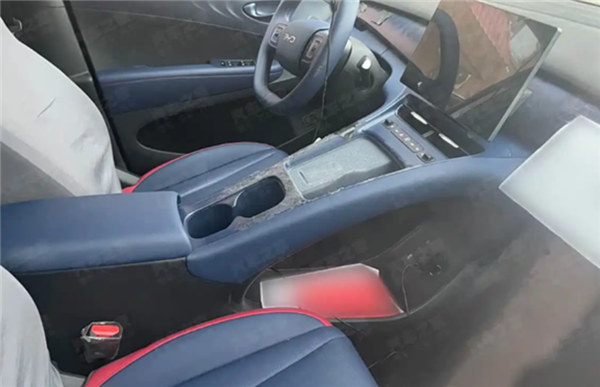
 内饰信息此前汽车之家也已曝光过,整套座舱彻底摒弃现款的设计思路。

二 | 倾斜式中央岛台造型十分吸睛,设计风格颇具辨识度。车内换装尺寸更大的悬浮中控大屏,取消独立液晶仪表,行车相关信息全部整合在中控屏幕当中。前排设置无线充电面板,中控台下方留出贯通式大储物空间,方便放置各类随身物件。全新双辐式方向盘造型轻薄简约,座椅辅以红色缝线进行点缀。
Current article:http://www.linlangdouwaqiexusan.bond/news/20260826_790.htm
Published on:19:23:58
我的网站相关内容
 OPPO K10x 将于9月16日正式发布_闪充_机型
 云南边坡垮塌致4人失联
 球报:哲凯赖什今夏离开葡体,俱乐部将解约金降低至7000万欧
 政声直达|截至今年6月,河北智能算力规模、在用机架规模均位列全国第一
 许家印的足球遗产
 全球车企首家!吉利获道路车辆安全与人工智能国际权威认证
- ·iPhone 14 Pro零售版到货 提前激活罚款20万/台_Max_Plus
- ·新赛道孕育新机遇 未来产业激荡发展新动能
- ·两部门对河南启动国家四级救灾应急响应
- ·强台风“沙德尔”逼近浙闽沿海 福州各部门迅速响应积极应对
- ·Chinese FM responds to Trump’s order to scale back military exercises with South Korea
- ·러시아 탄광마을 기생충 감염 폭증..."북한 노동자 유입이 원인"
- ·Man in India Found Guilty of Impersonating Missing Son of Wealthy Landlord For 41 Years - Report
- ·拼多多直通车开车技巧
我的网站最新内容
- ·Chinese Foreign Minister: Attempts to Use Taiwan to Contain China Doomed to Fail
- ·Iran imposes sanctions on British officials for 'backing terrorism'
- ·金价突然大跌,投资群炸锅,“死多头”也顶不住了:一下子把我砸醒,是反转还是调整?专家解读
- ·Severe Drought Causing Ruins of Ancient Roman Bridge Built Under Nero's Reign to Reemerge From Tiber
- ·「知らん間に凄い世界に…」一般の常識超えたりくりゅうの“大技”にX騒然「声出た」三浦はポーズ
- ·不仅Z9G和A9G电视:索尼将在2019年推出更多新产品
- ·推动金融更好支持养老行业发展
- ·伊之密:上半年归母净利润3.2亿元,同比下降7.05%
- ·33 killed in Nepal floods, landslides
- ·央行报告:充分发挥货币信贷政策导向作用
- ·《神鬼寓言4》惊现新美妞!玩家兴奋 垃圾审美要改?
- ·福州发布山洪灾害风险红色预警
- ·河北鼓励错峰度假:预计将迎来2.5天的短、长假期。
- ·这十年,奥运给伦敦留下哪些遗产
- ·乌鲁木齐户外露营企业综合实力评估分析
- ·海南林业产业强劲发展 让热带花卉成“致富花”,海南林业产业强劲发展 让热带花卉成“致富花”
我的网站热点内容
- ·浙商中拓:本期公司共发生资产减值损失和信用减值损失约3.35亿元
- ·爱子的产生需要探知宇宙外部的供给状态| 赵杰 | 量子意识
- ·火药味拉满! 76人记者:东部或现30年最强赛季
- ·PM Narendra Modi Tears Into British Education System, Claims Was ‘Never Part of Indian Ethos’
- ·“沙德尔” 影响,明后天风雨登场
- ·噩耗!13岁少年在西班牙夺冠庆典时遇难
- ·A mountain standing for millennia finds new ways to tell its story online
- ·李强会见约旦国王阿卜杜拉二世
- ·县委常委会(扩大)会议召开
- ·Cong polls: Members use secret ballot to choose between Mallikarjun Kharge, Shashi Tharoor
- ·新认定50家!浙江公布省级零工市场名单
- ·一眼就能分清!vivo X500渲染图出炉:标准版和Pro版风格截然不同
- ·万余名海外客打卡!元阳梯田打造世界级文旅新地标
- ·老外唱衰中国内存前途 一看他头像就懂了:毫不意外
- ·谷歌 Android XR 拟升级实时翻译:“仅前方”拾音增强一对一对话
- ·原创 “父母在,不远游,游必有方”的新内涵